
How can organic pollutants be removed from industrial wastewater?
Organic pollutants in industrial wastewater can be treated using advanced oxidation processes (AOPs). VuOxi Plasma Oxidizer uses non-thermal pulsed corona discharge to generate reactive oxidants, including hydroxyl radicals and ozone, which oxidize dissolved organic contaminants in water.
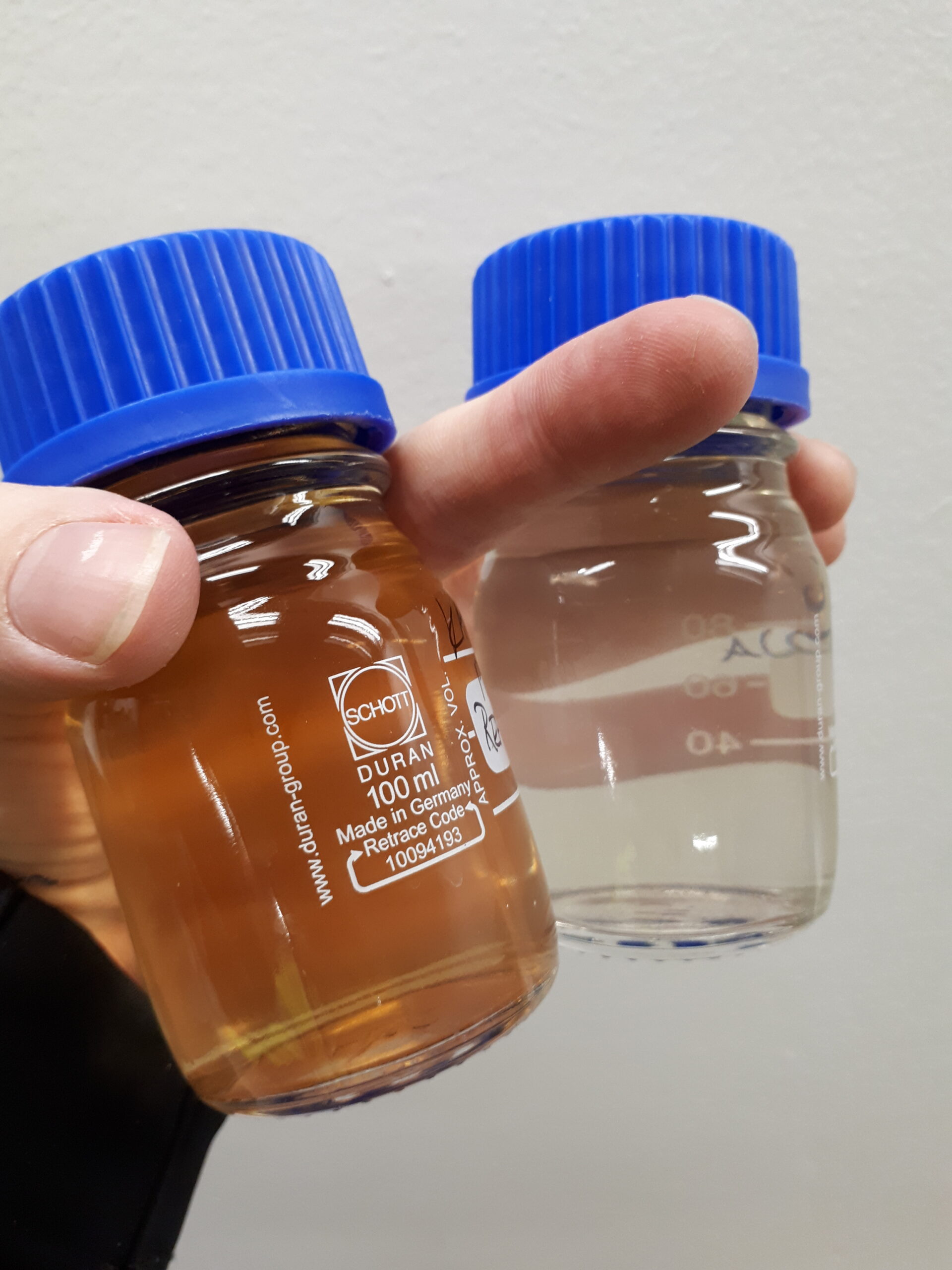
What are organic pollutants in industrial wastewater?
Organic pollutants are carbon-based compounds that can enter industrial wastewater from manufacturing, processing and other industrial activities. Depending on their chemical structure and concentration, they can be difficult to remove using conventional biological or physical treatment processes.
Examples of organic pollutants that may be present in industrial wastewater include:
- Pharmaceuticals
- Phenolic compounds
- Biocides and pesticides
- Surfactants
- Dyes
- Polycyclic aromatic hydrocarbons (PAHs)
- Oily residues
- Other dissolved organic compounds
How does plasma oxidation remove organic pollutants?
VuOxi Plasma Oxidizer uses non-thermal plasma to generate reactive oxidants directly in contact with water.
The plasma process uses electrical energy to generate reactive species including hydroxyl radicals (•OH) and ozone (O₃). These oxidants react with dissolved organic compounds and break down their molecular structures. Under suitable conditions, oxidation can continue toward mineralization, although complete mineralization is not always required to achieve the treatment target.
What contaminants can plasma oxidation treat?
| Contaminant group | Examples | What plasma oxidation does |
|---|---|---|
| Pharmaceuticals | Pharmaceutical residues and active compounds | Oxidizes and degrades organic compounds |
| Phenolic compounds | Phenols and substituted phenols | Oxidizes and degrades phenolic compounds |
| Biocides and pesticides | Biocides, pesticides and related organic compounds | Oxidizes and degrades organic compounds |
| Surfactants | Surface-active organic compounds | Oxidizes and degrades organic compounds |
| Dyes | Organic dyes and colour-forming compounds | Degrades colour-forming compounds and reduces colour |
| Polycyclic aromatic hydrocarbons (PAHs) | PAHs and other persistent aromatic compounds | Oxidizes and degrades aromatic compounds |
| Oily residues | Dissolved and emulsified organic compounds | Oxidizes organic contaminants |
| Other dissolved organic compounds | Application-specific organic contaminants | Oxidizes and degrades organic compounds |
Treatment performance depends on the specific contaminant, concentration and water matrix. Laboratory or pilot testing may be required to determine suitable treatment conditions.
Tested against nearly 100 organic compounds
VuOxi Plasma Oxidizer has been tested for the degradation of nearly 100 organic compounds, including pharmaceuticals, phenolic compounds, surfactants and fuel additives. These tests cover a range of persistent organic contaminants and demonstrate the broad applicability of plasma oxidation. Treatment performance remains application-specific and depends on the contaminant, concentration and water matrix.
What industries can use plasma oxidation for wastewater treatment?
Plasma oxidation has been tested for organic pollutants in wastewater from several industrial sectors, including:
- Food production and food processing
- Agriculture
- Pharmaceutical manufacturing
- Mining
- Chemical manufacturing

Benefits of VuOxi Plasma Oxidation
- Chemical-free operation
VuOxi Plasma Oxidizer generates reactive oxidants using electricity, ambient oxygen and the treated water rather than dosing conventional treatment chemicals.
- No moving parts
The reactor has no moving parts, which supports low mechanical maintenance requirements.
- Large plasma-water contact area
The reactor is designed to provide a large contact area between the plasma and water, supporting the transfer of reactive species into the treated water.
- Industrial-scale technology
VuOxi has developed plasma oxidation into an industrial water-treatment system rather than a laboratory-scale process.
What is the difference between plasma oxidation and conventional wastewater treatment?
Conventional industrial wastewater treatment may rely on biological, physical or chemical processes. Non-thermal plasma oxidation is an advanced oxidation process that generates reactive oxidants using electrical energy.
Plasma oxidation can therefore be considered as a treatment step for wastewater streams where dissolved organic contaminants remain after conventional treatment or where specific refractory compounds are difficult to remove.
The best solution for your process?
We expand this database with continuous testing. To find the best solutions for your process, we also offer trials for waters with challenging organic contaminants. If you are interested in a trial, contact our experts.
Contact us
The VuOxi team is dedicated to restoring water to its most natural, pure state, free from contaminants and impurities.
Let us help you to secure your water and your future.